

Mississippi Native: Jesse Yancy
"You must live in Mississippi to understand it, and you must be a native-born resident not only to fully understand it but also to come to appreciate it on its own terms."
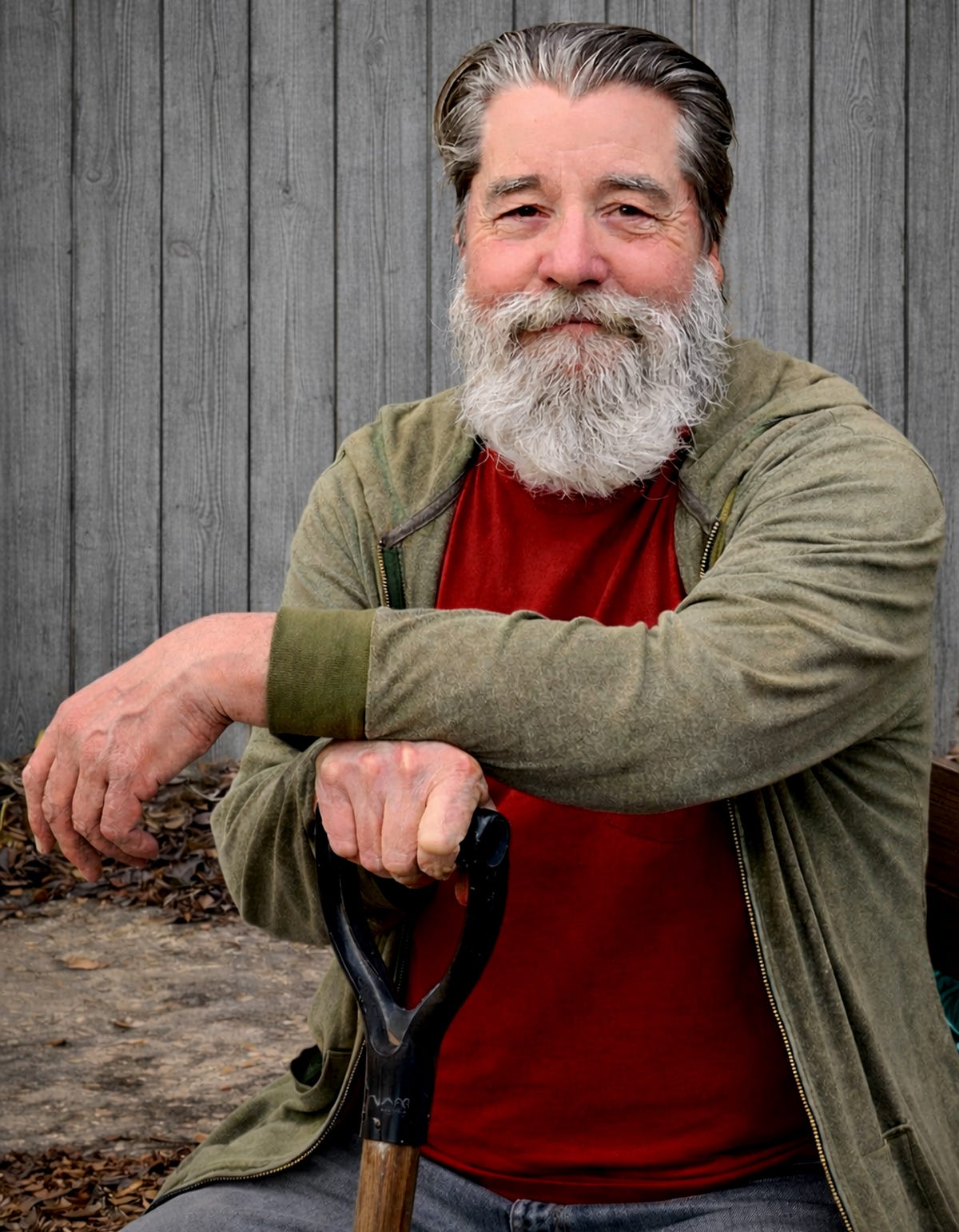
What does it mean to call Mississippi home? Why do people choose to leave or live in this weird, wonderful, and sometimes infuriating place? Jesse Yancy passionately pursues his interests and curiosities—most of which deepen his relationship to home and place. For the past two years, I’ve published his Southern food and culture writings—from the best way to prepare dove to M.F.K. Fisher’s time at Piney Woods School—in the column Mississippi Sideboard, which itself is an offshoot of Jesse’s long-running blog. For many years, Jesse cultivated a lush garden in the Belhaven neighborhood of Jackson that became a neighborhood oasis and gathering spot. The Calhoun County native now lives in Raymond, and has no interest in leaving his home state. Jesse writes: “No, I’ll never move away unless for some reason I must, but not for any sense of duty, which is something I don’t have. Loyalty, yes, but not duty.”
Where are you from?
My hometown, Bruce, is in north central Mississippi. It’s a small, isolated town, and like many out-of-the-way places has gone through decades of decline. It was a wonderful place to grow up. The county, Calhoun, is very rural—Pittsboro, the county seat, has less than 200 people—and my family has been there for almost 200 years. Bruce is archetypical small-town South: a square, a lumber mill, and a cotton gin. The library in town is named after my father.
How long have you lived in Mississippi?
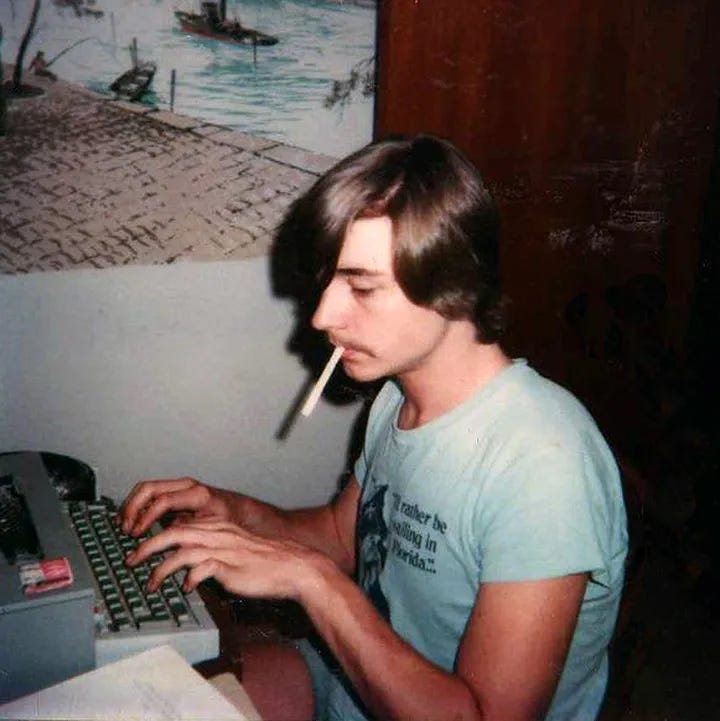
Apart from six wretched years in the Florida panhandle during the mid-1980s, I’ve lived in Mississippi my entire life: Bruce, then Oxford for almost thirty years, a few years in Tupelo, then Jackson for twenty more. Now I call beautiful old Raymond my home.
What does “home” mean to you? How does Mississippi fit into that definition?
Home is a figment of memory evoking a sense of peace and security, a sort of paradise, and, like all true paradises, lost. You can’t go home again. You can, however, frame that peace and security within yourself, and take it with you wherever you go. That home is a work of the mind doesn’t make it any less real or magical.
I’m not small-minded or bigoted at all, I’m simply acutely aware that I don’t have a very sophisticated outlook. Perhaps provincial is a more apt word. I feel uncomfortable anywhere else but Mississippi.
How have you cultivated community in Mississippi? Who are the people who have made you feel rooted here?
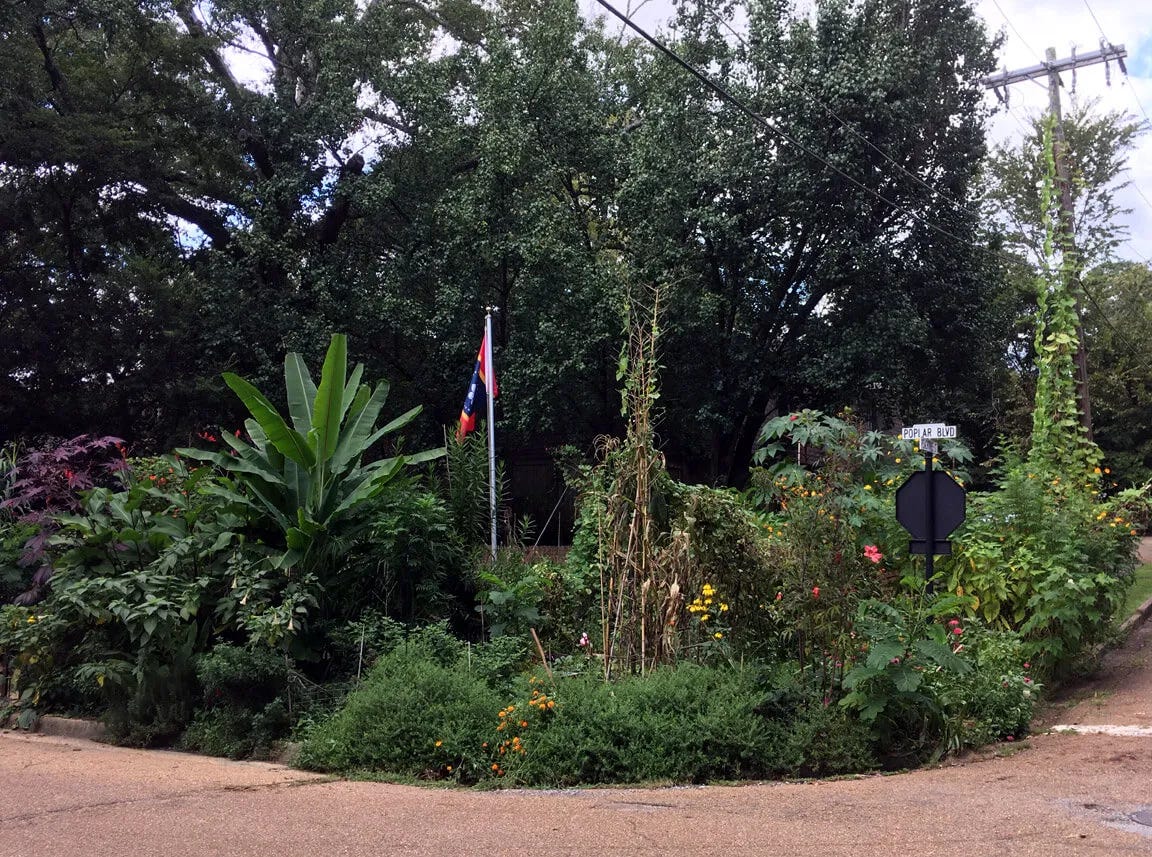
In Jackson, I lived in Belhaven where I started a garden in a parking lot. Over twelve years, I filled it with soil, flowers, fruits and vegetables, and bric-a-brac. The garden became a stopping place for people walking dogs, jogging, or just strolling. Neighboring gardeners swapped plants with me. Artists came there to paint. Some brought their work: pots, sculptures, structures. It’s gone now, a barren concrete parking lot again, but the experience taught me that sharing a common interest fosters community. I started the blog, Mississippi Sideboard, for a similar reason, for people interested in food, books, and history. It, too, has become a crossroads. My oldest friends who are still here make me feel rooted; we have much to share with one another, a whirlpool past that keeps us together.
What’s the weirdest question or assumption you’ve encountered about Mississippi (or about you as a Mississippian) by someone who’s never been here?
Years ago, I traveled to Seattle and I was talking to this woman from Germany. She commented on my accent and asked where I was from. When I said “Mississippi” she said, “Oh, those shoes must be uncomfortable for you.” She thought that Mississippians didn’t wear shoes because we’re all so poor and it’s so hot here. She wasn’t mean, that’s just what she believed.
How has living in Mississippi affected your identity and your life’s path?
Mississippi Burning (1988) was released while I lived in Florida, and I was mildly shocked that the people I worked with there believed that Mississippi is very much the same as it was in 1964. I say this by way of explaining that living in Mississippi most of my life has made me somewhat unworldly. I’m not small-minded or bigoted at all, I’m simply acutely aware that I don’t have a very sophisticated outlook. Perhaps provincial is a more apt word. I feel uncomfortable anywhere else but Mississippi; even the idea of traveling somewhere puts me off. This has circumscribed my life’s path, but I’m okay with that.
Nobody who moves to Mississippi as an adult has the resources, the amassed nuances of life here to know it root and branch. People who have lived here their entire lives can love it despite its darkness.
What is something that you’ve learned about Mississippi only by living here? In what ways has Mississippi lived up to your expectations?
It’s true of anywhere, I suppose, but you must live in Mississippi to understand it, and you must be a native-born resident not only to fully understand it but also to come to appreciate it on its own terms. There’s no other way. Nobody who moves to Mississippi as an adult has the resources, the amassed nuances of life here to know it root and branch. People who have lived here their entire lives can love it despite its darkness. And I’ve never had any expectations of Mississippi; that would be foolish. Mississippi doesn’t figure in to expectations.
Do you ever consider moving away someday? Does a sense of duty keep you rooted here? Do you have a “tipping point”?
No, I’ll never move away unless for some reason I must, but not for any sense of duty, which is something I don’t have. Loyalty, yes, but not duty. It’s conceivable, perhaps, that if the political situation becomes more oppressive, I might have to leave, but I can’t see that day coming. Not yet, at any rate.
What do you wish the rest of the country understood about Mississippi?
That poverty, race, and religion make Mississippi what it is. Recognizing the interplay of those three characteristics is the key to answering every “Why?” or “What?” anyone would ever ask about Mississippi. Sounds simple; it isn’t.
That poverty, race, and religion make Mississippi what it is. Recognizing the interplay of those three characteristics is the key to answering every “Why?” or “What?” anyone would ever ask about Mississippi. Sounds simple; it isn’t.
Do you have a favorite Mississippi writer, artist, or musician who you think everyone needs to know about?
Euphus Ruth’s work has an uncommon aesthetic and exceptional craftsmanship. The images themselves are striking, hauntingly beautiful, some with heart-piercing starkness, others tantalizingly abstruse and nebulous. His light always finds an equilibrium. Ruth’s work falls into Southern Gothic and often skirts the Otherworld. His devotion to the wet-collodion process sharpens his eye for light others should see.
If you had one billion dollars to invest in Mississippi, how would you spend your money?
Given a billion dollars to invest, I would establish a statewide conservancy to purchase land that is threatened by development as well as areas deserving of restoration. These areas would not be established as recreational venues in any capacity, and access to some areas would likely be restricted. The mandate of the conservancy would include every area of the state. Some might deride this enterprise as lacking in social responsibility. I don’t care. Mississippi still has a great deal of outstanding natural beauty, and it deserves protection.
What or who do you want to shamelessly promote? (It can absolutely be a project you’re working on, or something you are involved in.)
Visit the Mississippi Sideboard (jesseyancy.com). You can search for articles you might like and browse the photos. Leave a comment. Send me an email. I’d love to hear from you.
Jesse Yancy, a native Mississippian and a graduate of the University of Mississippi, is a writer, gardener, and editor living in Raymond. Yancy publishes articles about food, history, and literature on his blog, Mississippi Sideboard.
One year ago:

Two years ago:

Three years ago:

This contains another excellent definition of home, especially, “That home is a work of the mind doesn’t make it any less real or magical.” Additionally, when Mr. Yancey discusses the lady who made the dumb-ass comment about his shoes, he reminds me that I must do a better job extending grace to people for their ignorance: “She wasn’t mean; that’s just what she believed.” Part of me is like, “If she believed that, she’s stupid,” because I often assume that people are willfully ignorant or suffer from what James Baldwin called “selective naiveté.” But, part of me wouldn’t want to be judged badly simply for not knowing something. So, I guess I owe people the grace that I want extended to me. And, of course, no truer statement was ever spoken than, “Mississippi doesn’t figure into expectations.” Ultimately, I like that, if given the resources, Mr. Yancey will help the state how he wants to help and doesn’t care if others don’t see the usefulness in his efforts. Often, most people don’t truly know why something is useful or essential until they are, sadly, forced to learn why. That is what makes him a great artist—his ability to see the beauty and great taste in things that some might not understand until they taste it. Lord knows that my wife has forced me to expand my unsophisticated palate more than once. Great interview!
I loved seeing the photo of your beautiful corner garden in Belhaven. It gave me so much pleasure over the years and, though it pains me to see the empty parking lot now, I'm reminded every time I walk by of what a miracle that garden was!